3 min read

Contractors carry the greatest risk when excavating, but often have the fewest tools to manage that risk efficiently. While the 811 system plays a critical role in protecting underground infrastructure, the reality is that many contractors are forced to navigate a process that hasn’t kept pace with the speed and complexity of modern construction.
In a recent NUCA National webinar, Marc Krichman, Director of Product Marketing for Irth 811spotter, explored why 811 ticket management for contractors has become such a challenge and how simplifying the process can help prevent damages before they happen, improve communication across job sites, and stay focused on safe, productive excavation.
The Hidden Cost of 811 Inefficiency
At its core, the national 811 system exists to notify utilities before digging begins so buried lines can be marked and protected. But for contractors, an 811 ticket often triggers a flood of emails, paper records, PDFs, and paint markings that must all be tracked and verified.
When damage occurs, it’s typically the contractor who pays through delays, rework, liability, or worse. And yet, most contractors are still managing this critical process using paper, spreadsheets, and inboxes. It works — until it doesn’t.
Across the U.S., inefficiencies in the 811 system contribute to more than $76 billion in damage, waste, and societal costs each year. Spread across the roughly 44 million tickets created annually, that equates to nearly $1,700 in waste per ticket. While utilities fund the system, contractors absorb the day-to-day consequences long before those costs show up anywhere else.
The 811 system is essential, but it wasn’t designed for how work actually happens in the field today.
What "Good" 811 Ticket Management Looks Like
Before introducing new tools or technology, it’s important to define the ideal state. In a well-functioning process:
- Every ticket and utility response lives in one centralized place
- The office and the field have shared visibility into ticket status
- Verifying responses and markings takes seconds, not hours
- Crews aren’t worried about expired tickets or missing information
- Communication between planners and field crews doesn’t break down
When contractors spend less time chasing paperwork, they spend more time moving dirt, and the risk of damage drops dramatically.
From Compliance to Prevention
Simplifying ticket management makes the process easier while fundamentally changing outcomes. When contractors can clearly see whether a job site is cleared to work, where issues exist, and what actions are required, compliance becomes proactive damage prevention.
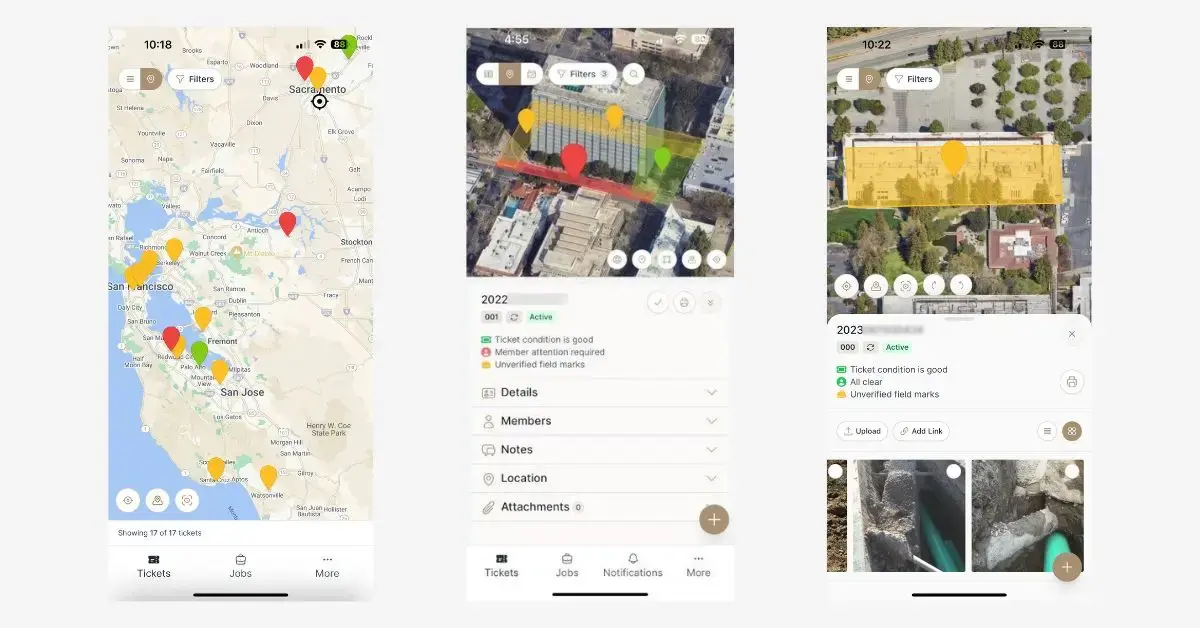
Modern ticket management platforms replace paper files and spreadsheets with centralized, map-based systems that automate tracking, renewals, and verification. Field crews can quickly confirm markings, capture georeferenced photos, and update the office in real time without slowing down the job.
Across contractors using modern systems, this shift has led to:
- More than 90% reductions in damage claims
- Faster field verification
- Improved coordination between office and field teams
- Thousands of dollars saved per month in avoided delays and rework
Real-World Impact Across Contractors
The impact of better 811 ticket management shows up differently depending on scale, but it’s meaningful at every level.
- Large contractors managing thousands of tickets per month have replaced manual tracking that once required multiple full-time staff, freeing teams to focus on higher-value work and saving hundreds of thousands of dollars annually. MGE Underground handles roughly 2,500 tickets per month and saves more than $200,000 in operational costs annually by using Irth 811spotter.
- Multi-state contractors like Q&D Construction have shortened ticket verification from minutes or hours to seconds, improving schedule reliability and communication across crews.
- Small contractors handling just a few dozen tickets a month have eliminated confusion and risk by giving crews instant access to the information they need without digging through emails or making extra calls. Using Irth 811spotter, Navajo Pipelines has realized fewer delays, better communication, and a safer workflow.
Regardless of size, the common thread is clarity, visibility, and control.
Supporting the Field Without Slowing Them Down
Any system designed for contractors must work for the field first. Crews need fast access to ticket status, clear visual indicators of where it’s safe to dig, and simple ways to document markings.
When field teams can quickly verify conditions, capture photos, and move on with their work, the entire operation runs smoother. Most crews spend less than a minute a day interacting with the system yet the protection it provides lasts for the life of the project.
A Better Way Forward
Contractors are being asked to shoulder enormous responsibility inside an outdated process. But they don’t have to accept unnecessary risk, inefficiency, or administrative burden as the cost of doing business.
By simplifying 811 ticket management and aligning tools with how construction actually works, contractors can move beyond basic compliance and toward true damage prevention.
Because when the right information is in the right hands at the right time, everyone goes home safer. Watch the full webinar today: