4 min read

Pipeline integrity teams face an increasingly difficult challenge: growing system complexity and tighter regulatory timelines, with the same or fewer resources. In this environment, automation isn't a luxury. It's a necessity.
But here's what most organizations get wrong: automation doesn't fail because the analytics are inadequate. It fails because the data isn't ready.
Before machine learning models, advanced analytics, or AI can deliver meaningful value, your integrity data must be validated, aligned, and unified across sources. Unified data isn't just a best practice; it's the foundation that makes scalable automation possible.
"The standardization process is fundamental to pretty much everything you would want to do downstream."
What Does "Unified Integrity Data" Actually Mean?
Unified data goes far beyond consolidating information into a single database. True data unification means:
- Inspection, assessment, and asset data are aligned to a common pipeline reference, eliminating inconsistencies in stationing, mileposts, and location references
- Data from multiple vendors and systems is standardized and validated, creating consistency across different formats and structures
- Engineering teams can analyze data immediately, without manual reconciliation, spreadsheet gymnastics, or data cleanup
When your data is truly unified, automation becomes repeatable, scalable, and trustworthy.
"Data in our industry really comes in a wide variety of formats—unstructured and semi-structured—and it typically needs to be processed first before you can develop models."
Real-World Examples: Where Unified Data Unlocks Automation
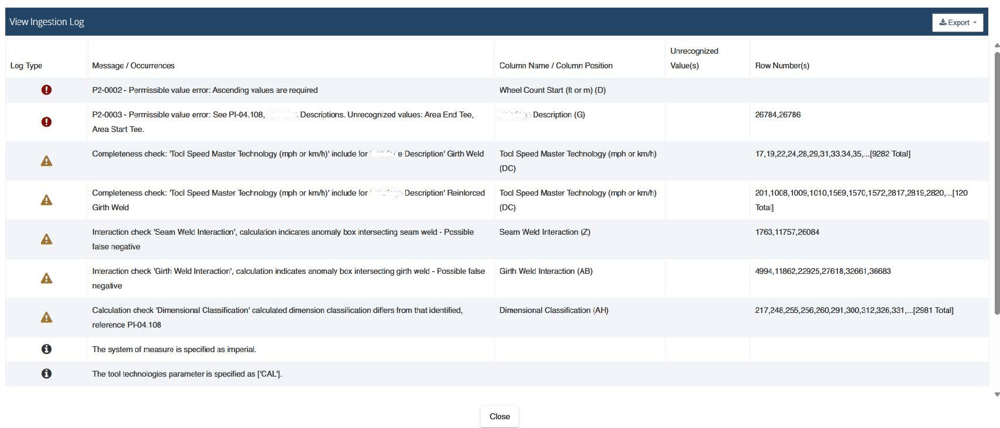
Example 1: Automated QA/QC of ILI Reports with Vendor Portal
Inline inspection (ILI) data is among the most valuable and most complex data sources in pipeline integrity. Each vendor delivers data in slightly different formats, leading to manual QA/QC processes, endless spreadsheets, email chains, and multiple revision cycles.
With unified data:
- ILI deliverables are standardized at ingestion
- Automated validation rules flag inconsistencies immediately
- Reports move through QA/QC faster with fewer revisions
The result: Automation replaces manual review steps, cutting cycle time while improving data quality. Teams catch issues early—before analysis even begins—rather than reacting to errors discovered late in the process.
"Once you bring everything into a standardized schema, you can actually focus on analysis instead of preparation."
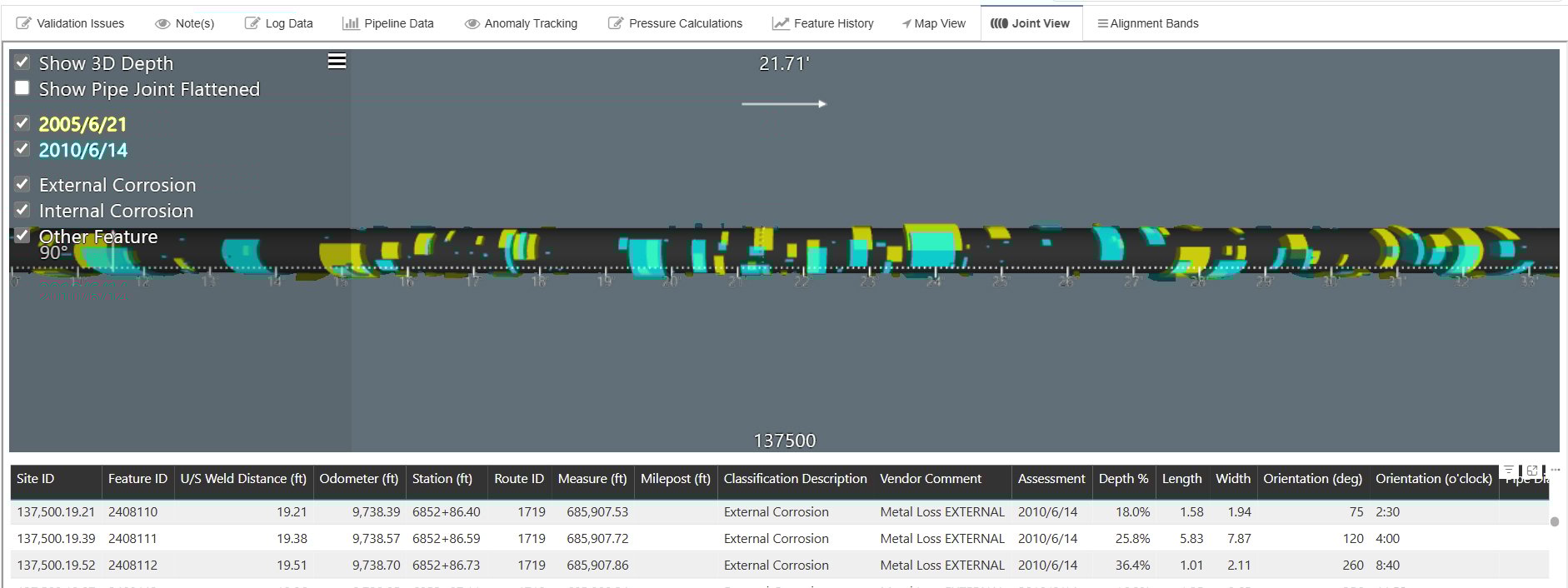
Example 2: ILI Analysis in Minutes, Not Days
When data lives in silos, even straightforward analysis becomes a time sink:
- Exporting data from multiple systems
- Aligning mileposts or stationing manually
- Reconciling conflicting attributes across sources
Unified data eliminates these bottlenecks. Once inspection data is aligned to a single pipeline framework, engineers can:
- Filter, segment, and compare inspection runs instantly
- Apply consistent analysis logic across all datasets
- Spend their time interpreting results—not preparing data
This is where automation shifts from theoretically possible to practically scalable.
Example 3: On-Demand Pipeline Crossing Analysis
Pipeline crossing assessments traditionally require pulling data from GIS, inspection results, and historical records and then manually stitching everything together.
With unified integrity data:
- Crossing locations are automatically aligned with inspection and asset data
- Analysis logic applies consistently across your entire system
- Reports are generated on demand instead of being built from scratch each time
Automation is not just faster; it's more consistent and defensible, reducing risk while improving confidence in your results.
Example 4: Automated Regulatory Reporting (PHMSA F&G Annual Reports)
Regulatory reporting is where unified data delivers immediate, tangible value. When inspection, asset, and repair data are aligned to a single pipeline reference, PHMSA F&G reports can be populated automatically from validated source data rather than assembled manually.
The benefits:
- Eliminates duplicate data entry
- Reduces errors significantly
- Ensures consistency year over year
What was once a time-consuming reporting exercise becomes a repeatable, defensible workflow—built on a single source of truth.
Example 5: Advanced External Corrosion Assessment
External corrosion assessments depend on synthesizing multiple data sources: CP data, CIS surveys, ILI results, environmental factors, and historical context.
When those datasets are unified:
- Corrosion indicators can be analyzed holistically, not in isolation
- Patterns emerge that remain invisible in siloed systems
- Advanced models can be applied repeatedly with confidence
This is where unified data enables not just faster workflows, but fundamentally better engineering decisions.
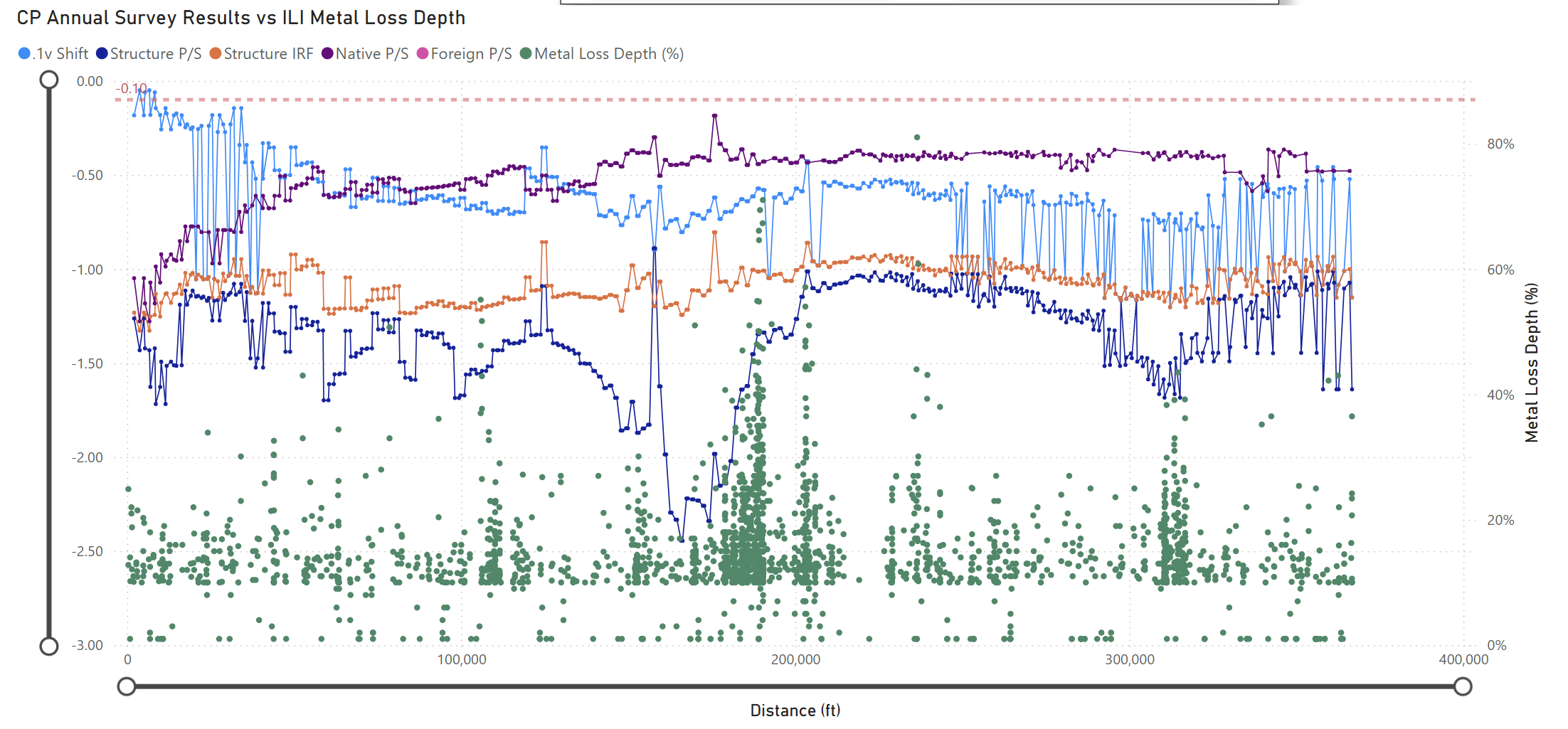
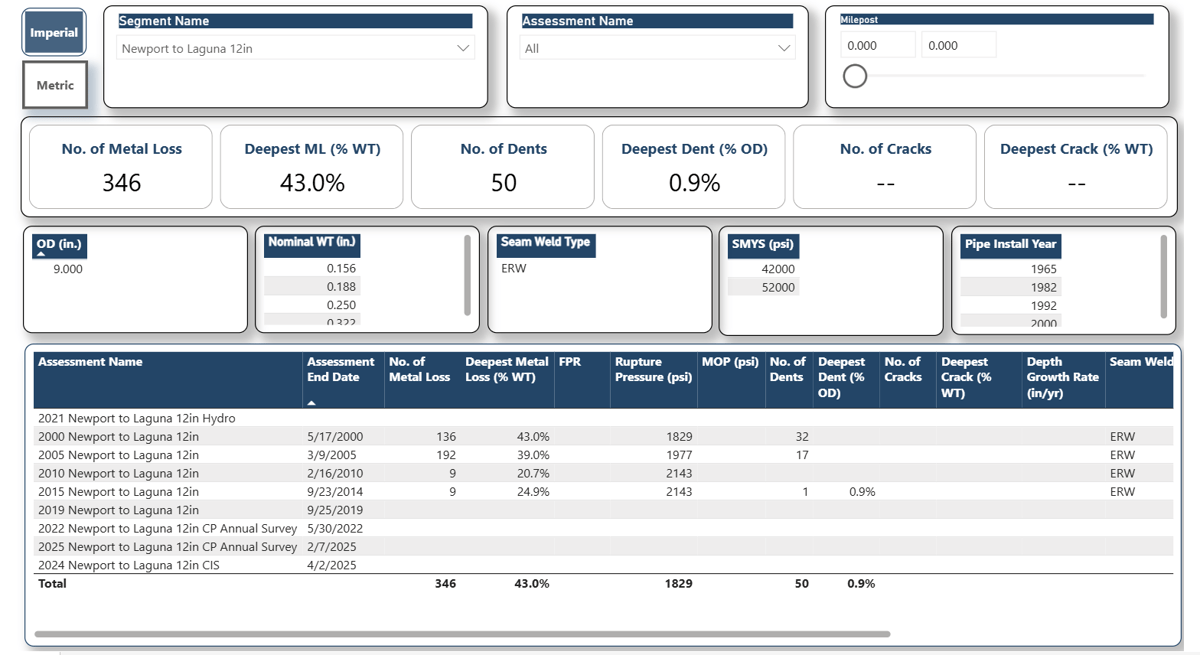
Example 6: Integrated Data View — Seeing the Full Integrity Picture
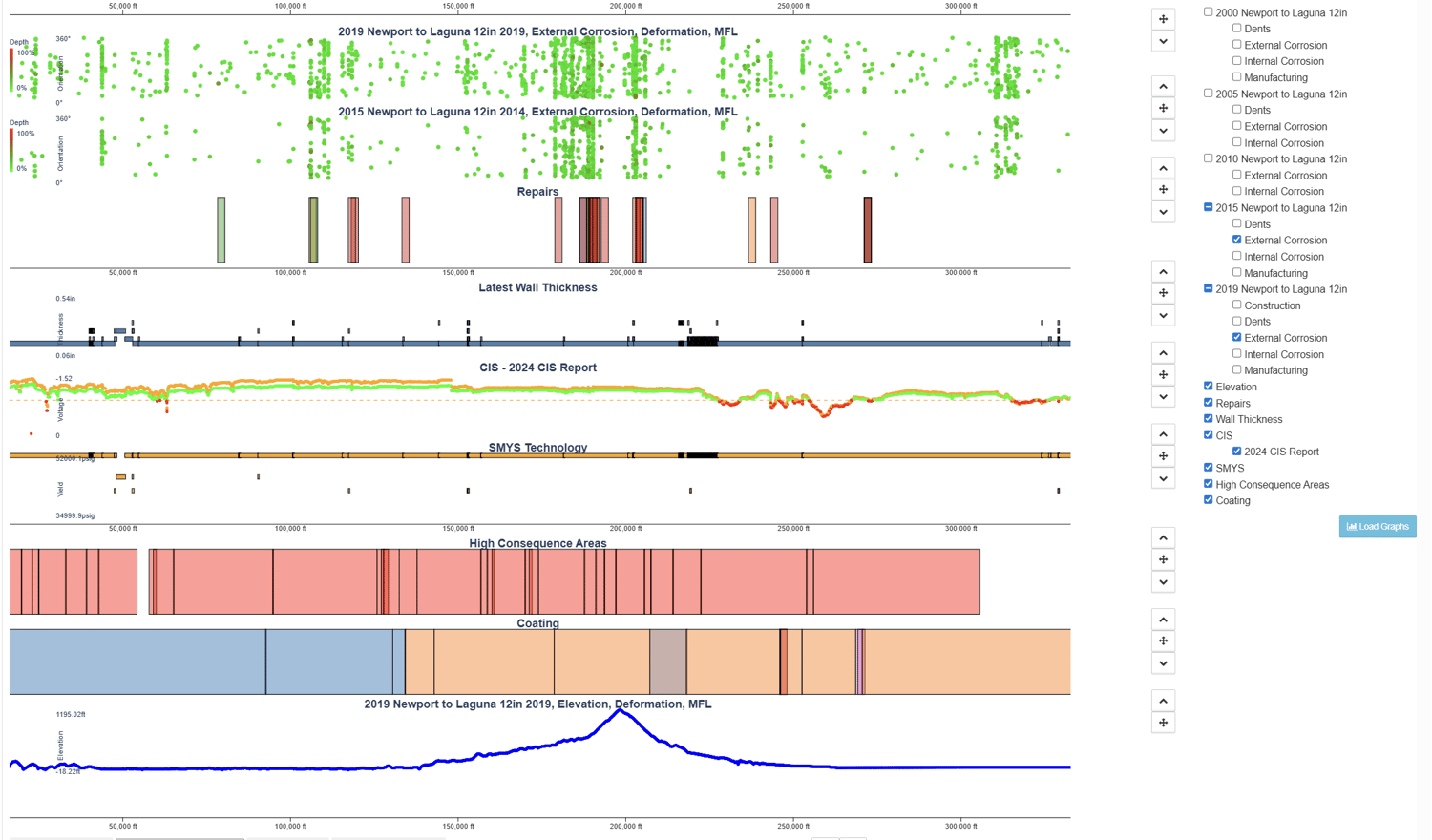
The Integrated Data View brings unified integrity data together into a single, aligned view—combining inspection results, asset attributes, historical findings, and contextual data along the pipeline.
The transformation:
Instead of analyzing datasets in isolation, integrity teams can see how threats intersect both spatially and temporally, revealing relationships that are difficult or impossible to identify in siloed systems.
Why it matters:
With the Integrated Data View, you align disparate data to a common pipeline reference, analyze faster and with more confidence, and support repeatable workflows that scale as your integrity program grows. Engineers gain the complete context they need to make informed decisions—all in one place, all aligned to the same reference system.
Building Your Automation Strategy: A Two-Pronged Approach
Prong 1: Unified Data — Your Foundation
Many organizations jump straight to advanced analytics or AI initiatives, only to hit the same wall: fragmented data that can't support automation at scale.
Unified integrity data:
- Reduces manual effort before analysis begins
- Enables repeatable, automated workflows
- Creates a reliable foundation for analytics, machine learning, and AI
The bottom line: automation doesn't start with sophisticated algorithms. It starts with data unification.
Prong 2: Industry-Wide Data — Scale and Diversity
At scale, effective automation requires more than just unified data—it requires enough of the right data.
As discussed in Irth's recent AI webinar: "We don't think it's possible to train the best models within any single pipeline operator using only their data."
The most reliable models emerge when data is unified and analyzed across a broad spectrum of operating conditions, vendors, geographies, and asset types. Why? Because "looking at data across the entire industry is what yields the most comprehensive models."
Here's the critical insight: Volume alone isn't sufficient. "Ten million anomalies sounds like a lot—until you start filtering for the specific conditions you're trying to model."
As datasets are refined for specific threats, failure modes, or operating contexts, diversity becomes just as critical as size. The more data you have—and the more varied its sources—the more accurate and resilient your models become.
The Path Forward
Pipeline integrity automation is not a question of if, but when and how. The organizations that will succeed are those that recognize a fundamental truth: automation is only as good as the data foundation beneath it.
Start with unification. Build toward industry-wide collaboration. The automation capabilities you need tomorrow depend on the data work you do today.