3 min read

For many contractors, 811 ticket management has long been viewed as a compliance box to check before work begins.
Create the ticket. Wait for responses. Confirm utilities have been marked. Dig.
But today’s excavation environment has changed.
As projects become more complex, schedules tighten, and crews spread across multiple job sites, the way contractors manage 811 tickets has evolved from a compliance exercise into a critical operational responsibility. Every project depends on accurate, up-to-date information, and every crew assignment, utility response, renewal, and field decision depends on that information being accessible when it’s needed.
The goal is better outcomes: safer jobs, fewer delays, stronger communication, and projects that stay on schedule.
The Hidden Complexity Behind Every Ticket
Every year, approximately 44 million excavation tickets generate more than 500 million utility responses across the United States. Those responses arrive through emails, PDFs, paperwork, online portals, and, ultimately, paint on the ground. Every response must be tracked, verified, and coordinated before excavation can safely begin.
Once that information starts flowing, responsibility shifts squarely to the contractor.
If a renewal is missed, if a locate response isn’t received, or if crews begin work without complete information, the consequences can be significant, from project delays and unexpected costs to damaged relationships and, in the worst cases, serious injuries.
Contractors excel at building infrastructure. Managing dozens or hundreds of tickets across spreadsheets, inboxes, PDFs, and phone calls is another matter entirely.
When Manual Processes Become Operational Bottlenecks
Many organizations don’t realize their ticket management process has become a constraint until they begin to grow.
As project volume increases, what once felt manageable often becomes dependent on one or two individuals responsible to track ticket status, answer questions from the field, process renewals, and keep everyone informed.
That creates more administrative work and operational bottlenecks.
Field crews wait for updates. Project managers spend time tracking down information instead of managing work. Office staff becomes overwhelmed by routine administrative tasks. Small communication gaps begin to affect schedules, productivity, and ultimately project performance.
At that point, ticket management is no longer just paperwork. It’s influencing day-to-day operations.
Better Operations Start With Better Visibility
Leading contractors aren’t necessarily approaching 811 ticket management differently because of compliance requirements. They’re doing it because operational visibility has become a competitive advantage.
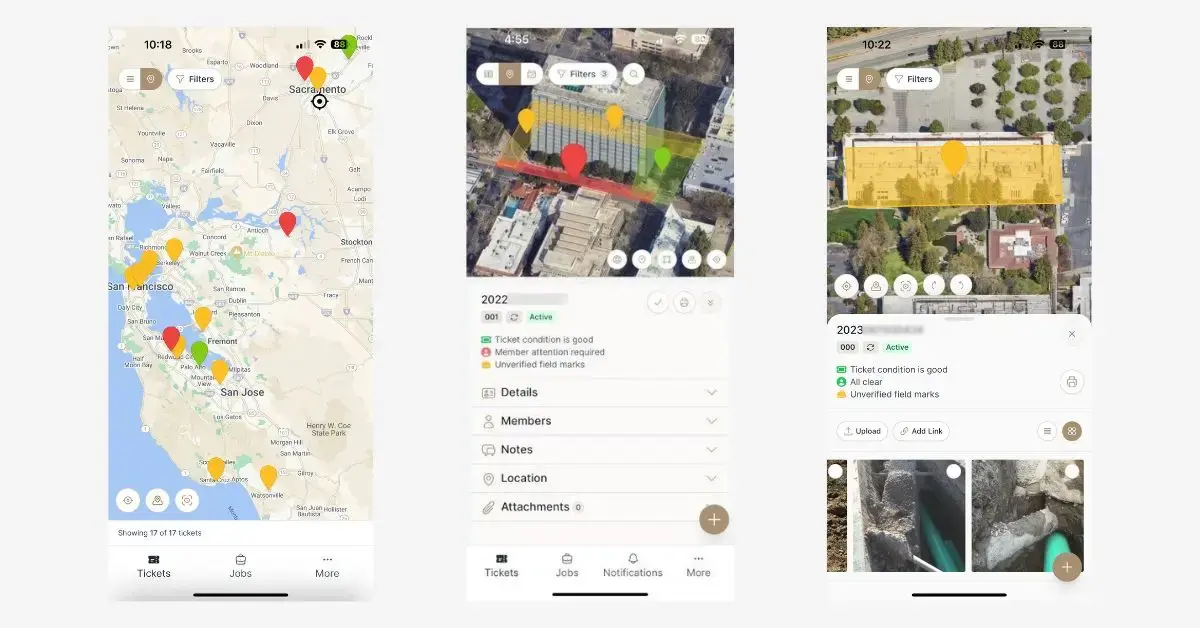
Instead of information being scattered across inboxes and spreadsheets, they centralize ticket data in one location. Office staff and field crews work from the same real-time information. Routine processes like renewals happen automatically rather than relying on someone to remember them. Before anyone breaks ground, verifying ticket status becomes a quick, standardized process rather than a series of emails and phone calls.
The result is a more organized ticket process with fewer delays, faster decision-making, and more confidence that crews have the information they need before work begins.
A Real-World Example of Operational Transformation
Charge, a design, procurement, and construction services provider, experienced many of the challenges common to growing utility contractors.
Operating across the western United States and self-performing excavation work on a wide range of gas and electric utility projects, the company managed a large volume of 811 tickets using a combination of one-call center systems, spreadsheets, and manual coordination. As the business expanded, that process became increasingly difficult to scale.
Field personnel relied on a central administrator for updates. Information wasn’t always immediately accessible, creating delays and unnecessary communication. Missed renewals occasionally occurred, and inactive tickets accumulated because there wasn’t sufficient visibility into the overall workload.
When Charge modernized its ticket management process with Irth 811spotter, 811 ticket management for contractors, it was more than implementing a new tool; it changed how information moved throughout the organization.
Field teams gained immediate access to the same real-time ticket information as office staff. Project managers could quickly identify outstanding utility responses or issues affecting work. Routine administrative tasks became automated, allowing staff members to spend less time managing paperwork and more time contributing elsewhere in the business.
During implementation, the company also discovered nearly 1,500 active tickets — far more than expected. Greater visibility allowed the team to identify 2,000-plus outdated tickets, clean up existing records, and focus only on active work. Adoption happened quickly because employees immediately recognized the operational value of having accurate information available wherever they were working.
Better Ticket Management Is Really About Better Outcomes
It’s easy to think of 811 ticket management as a technology discussion, but it’s actually an operations discussion.
The contractors seeing the greatest results and better outcomes aren’t simply replacing spreadsheets with software. They’re creating processes that improve visibility, reduce administrative effort, and keep the office and field working from the same information.
When crews have immediate access to accurate information, projects move faster, communication improves, and organizations reduce risk while creating more predictable operations.