
Case Study
One Place for Every Agreement, Every Record, Every Team
How a large North American utility unified land rights, stakeholder records, and agreement workflows in one platform and gave every team the visibility to move faster.
Context
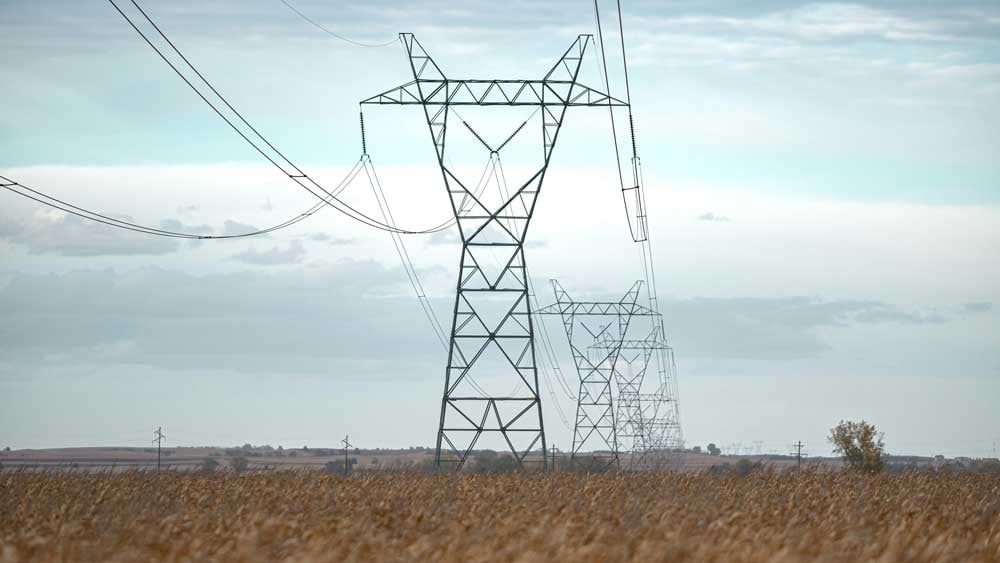
Large North American utility operating one of the world’s most extensive hydroelectric networks with thousands of km of transmission assets
Multi-team environment spanning land acquisition, GIS, government affairs, and stakeholder coordination
High volume of agreements, land rights, and stakeholder interactions across decades of assets
Challenges
- Land rights, agreements, and communications managed across disconnected systems, spreadsheets, and physical files
- Manual tracking of acquisition progress and permits created delays and inconsistent execution
- Reporting required external tools and manual data extraction, limiting operational use
- Limited ability to track task completion or progress across teams without parallel tools
- Complex stakeholder management across teams created duplication, access conflicts, and inconsistent records
Solutions
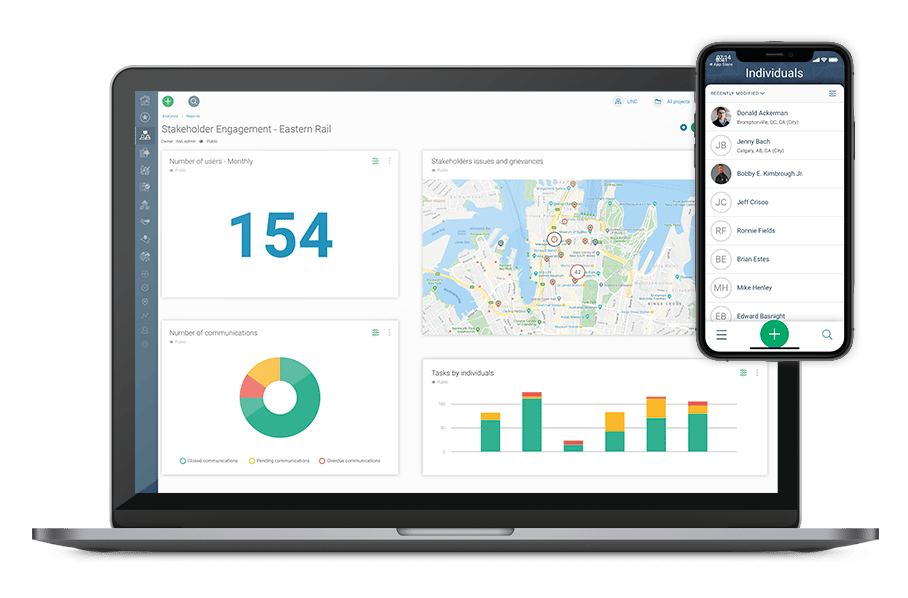
The utility implemented Irth Stakeholder and Land Management (SLM) to bring land rights, workflows, communications, and stakeholder records into a single operating environment.
- Land access and acquisition: full lifecycle management from parcel identification through long-term rights stewardship
- Outlook integration: communications captured and linked directly to agreements and stakeholder records
- Task and workflow management: structured task chains guiding work through acquisition, negotiation, validation, and completion
- Geospatial capabilities: agreements linked to mapped parcels with geometry defined directly in the platform
- Reporting and analytics: live land data that can be queried on demand, without extraction to external tools
“We were spending too much time finding information and not enough time acting on it. Every file required effort just to understand where it stood.”
Land Management Team, Major North American Utility
Key Benefits and Results
Reduced reliance on manual tracking tools and parallel systems for land acquisition management
Faster access to parcel status, agreements, and communications during active files
Managers able to track task completion directly, replacing manual follow-up and reporting processes
Increased user autonomy reduced dependency on centralized support for updates and reporting
Lower operational risk by consolidating agreements, communications, and stakeholder history in one system
“Having everything in one place, the agreement, the communications, the tasks, means we are not losing time piecing things together. The file tells its own story.”
Land Acquisition Team, Major North American Utility