 Christine Crowe

Pipeline operators have spent the last several years doing more outreach than ever: more letters, more meetings, more notifications. But after the latest cycle of API RP 1162 and PHMSA reviews, a harder question is surfacing: can you prove any of it worked?
That question is reshaping what "compliance" means for public awareness and stakeholder engagement programs. Regulators no longer just want confirmation that outreach happened. They want evidence that it changed behavior, that it reached the right audience, and that it's backed by a defensible record, not a folder of PDFs.
That's the gap Irth's Stakeholder & Land Management solution (SLM) was built to close. Rather than functioning as another communications tool, it works as the engagement intelligence layer underneath your damage prevention and compliance program, converting the outreach your team is already doing into an audit-ready record automatically. Here's how, capability by capability
1. 811 / Damage Prevention Integration
Regulatory link: 49 CFR §195.1185, excavation damage prevention along HLL corridors
Excavation activity near your corridor can be cross-referenced against stakeholder engagement records. High-frequency excavators working repeatedly near a corridor, especially near an HCA or class location boundary, get flagged for direct outreach and safety briefings, moving damage prevention from passive locate requests to active relationship management with the contractor community.
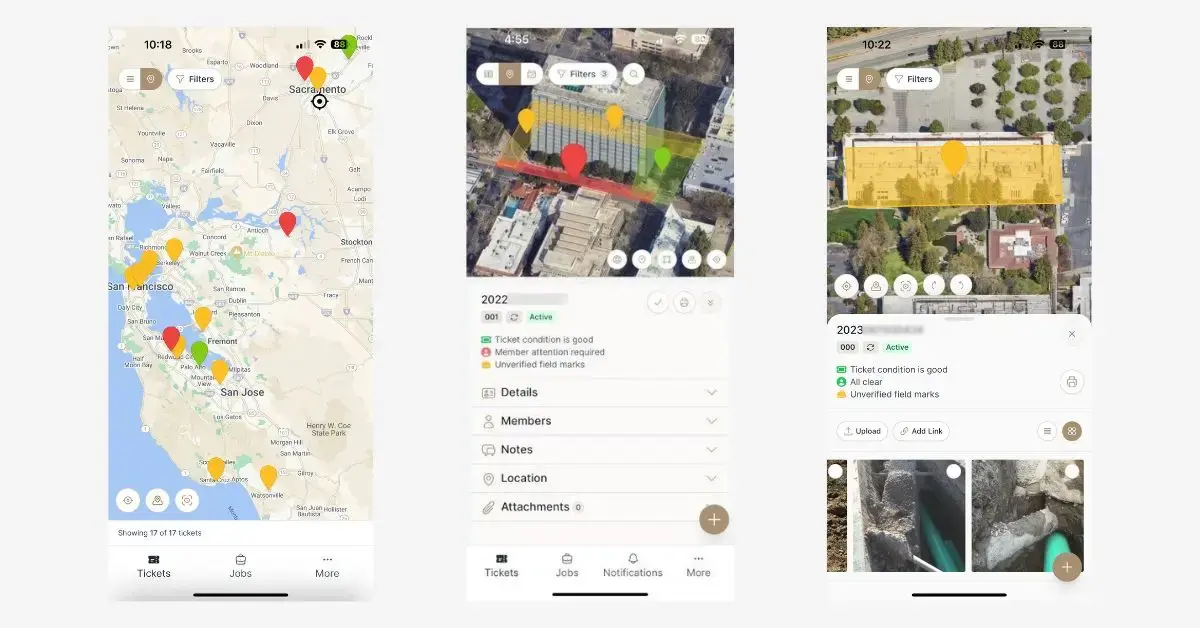
Connect your stakeholder platform to an 811 ticket management or damage prevention integration to get a fuller overview of excavation activity near your assets.
2. Interaction Logging & Audit Trail
Regulatory link: 49 CFR §192.616 / §195.440, Public Awareness Program audit readiness
Every landowner visit, phone call, notification letter, and public meeting is timestamped and stored the moment it happens. Instead of handing an inspector a stack of spreadsheets and email threads, your team can produce a complete, searchable engagement history, filterable by segment, date range, or regulatory requirement, without a single hour of pre-audit scrambling.
3. GIS Parcel Mapping & Class Location Alerts
Regulatory link: 49 CFR §192.1162, Class location change identification & re-engagement
When a segment's class location shifts because of nearby development, operators are required to respond and to document who they engaged as a result. Irth's solution ties every stakeholder record to the pipeline alignment spatially, so when a class location boundary changes, the system automatically surfaces every affected landowner and kicks off the re-engagement workflow. No manual cross-referencing of parcel maps against contact lists, and no missed households.
4. Landowner Lifecycle Management
Regulatory link: §192.1162 easement compliance / §195.1185 corridor relationship management
A major pipeline corridor can span thousands of parcels, and landowner relationships often outlast the people who first signed the easement. The platform structures that relationship into a defined lifecycle, from initial contact through ongoing monitoring, so commitments made during negotiation (fence restoration, drainage, crop compensation) are tracked to fulfillment, not lost when a parcel changes hands. Unfulfilled commitments are one of the most common drivers of community complaints, so this piece matters as much for relationships as it does for compliance.
5. Emergency Responder & Government Official Engagement Tracking
Regulatory link: 49 CFR §192.615 / §195.402, emergency response liaison requirements
Fire departments, LEPCs, and county emergency managers require ongoing liaison, not a one-time contact. Irth's solution tracks this outreach by fire district or jurisdiction and flags any jurisdiction that hasn't been contacted yet, before it becomes an audit finding.
The same applies to elected and appointed officials, who change every election cycle. Rather than manually tracking who holds a given role, the platform overlays the US Government Officials Database onto your stakeholder register, covering federal, state, and local officials. New officials are added automatically once results are certified, and outgoing officials are deactivated rather than deleted, so your engagement history stays intact and auditable.
6. HCA Stakeholder Register
Regulatory link: §192.903 / §195.452, High-Consequence Area engagement obligations
Schools, hospitals, and community organizations inside High-Consequence Areas are entitled to more frequent, more detailed engagement than the general public baseline. High-Consequence Areas can be defined directly on a map, making it easy to quickly identify which stakeholders fall within them. Monitoring can also be set up so that if a stakeholder's position or sentiment changes when an assessment is reviewed, staff are alerted, helping ensure intensified engagement obligations don't get missed as conditions around your corridor evolve.
7. Grievance & Complaint Management
Regulatory link: PHMSA complaint-triggered inspections
Unresolved community concerns are one of the most common paths to a surprise inspection. The platform structures every complaint through a defined lifecycle (receive, acknowledge, investigate, resolve, close with learning) and tracks it against resolution-time and aging metrics. A community that gets a prompt, respectful response rarely escalates to a regulatory complaint.
The Bottom Line
None of these seven capabilities requires a separate "compliance reporting" task bolted onto your team's workload. Each one generates its own audit trail as a byproduct of the engagement your team is already doing, which means the record builds itself, and your team stays focused on the relationships that actually reduce risk.
Want to see how Irth's stakeholder engagement solution fits your program?