7 min read
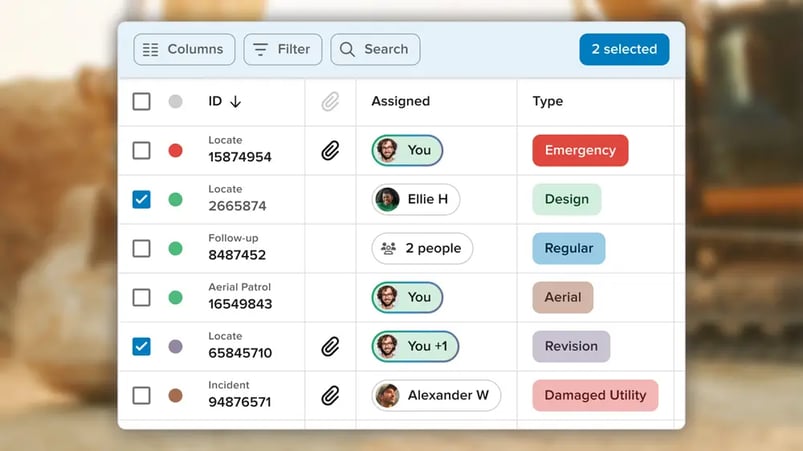
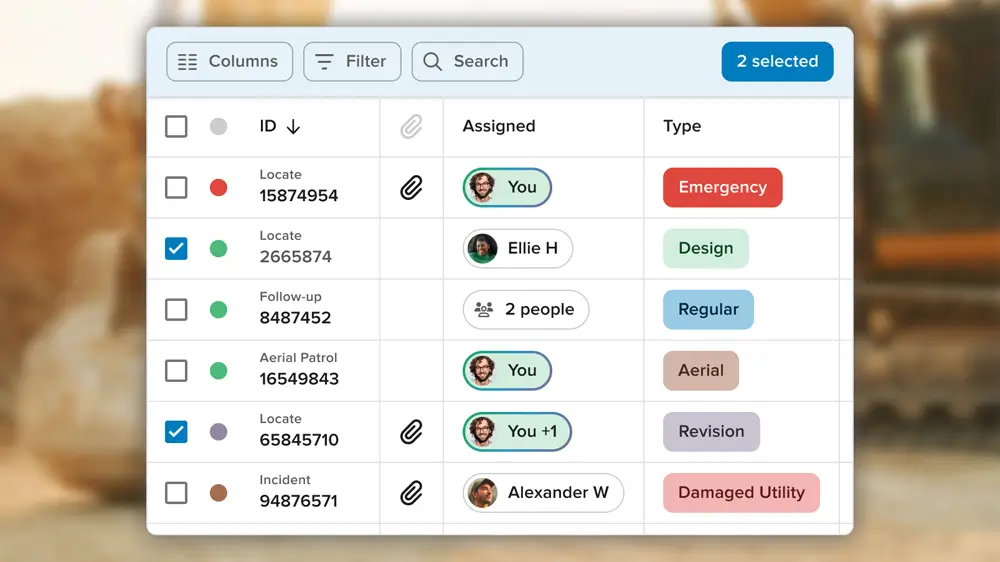
As the number of 811 tickets your team needs to process increases, the obvious question is: How can we improve 811 ticket management to manage more tickets with our current resources without compromising safety?
It’s a question that’s becoming increasingly important as excavation activity puts more pressure on damage prevention programs. The Common Ground Alliance’s (CGA) 2025 DIRT Data Summary analyzed 221,717 unique damage reports, with the CGA Index reaching a record high as damages continued to rise alongside construction activity.
But processing more tickets doesn’t necessarily mean pressuring locators to work faster.
Before a ticket ever reaches a locator, you can reduce unnecessary work, identify which tickets need the most attention, and make better decisions about how work is assigned. And once a locator is dispatched, everything from routing and access to information to field documentation can affect how efficiently that work gets done.
Improving utility locate efficiency includes making the entire process, from ticket intake through positive response, more efficient.
What Does Utility Locate Efficiency Really Mean?
A common way to think about locate efficiency is the number of 811 tickets completed in a day. That’s certainly one way to measure productivity, but it doesn’t tell you whether the entire locate process itself was efficient.
Consider two utilities that each receive 10,000 tickets.
One manually reviews nearly every 811 ticket and sends most of them to the field. The other has used tools that can systematically identify tickets that do not require a field visit, prioritize those that do based on urgency and risk, assign them based on workload and according to geography, and give field technicians the information they need to complete their work without moving between disconnected systems.
Even if their individual locators work at exactly the same pace, the second utility has a much more efficient operation.
Improving locate efficiency means completing locate work accurately and on time while making the best use of available people and resources. That means looking beyond field productivity to understand where capacity is being consumed across the entire process.
Where Does Locate Capacity Get Lost?
The first step toward improving locate efficiency is understanding where time and capacity are being lost.
The path from an incoming 811 ticket to a completed positive response includes multiple steps. Each one presents an opportunity for delays or unnecessary work to enter the process.
A ticket may require manual review before anyone determines whether a field locate is necessary. Dispatchers may spend time determining who should receive it. A locator may drive farther than necessary between assignments or arrive at a site without all the information needed to complete the work efficiently.
After the locate is complete, additional administrative steps may still be required to document the work and submit a positive response.
Individually, those inefficiencies can appear relatively small. Across thousands or millions of tickets, they can consume significant time and capacity.
Reduce Unnecessary Work Before It Reaches the Field
One of the most effective ways to create locate capacity is to avoid sending unnecessary work into the field in the first place.
When incoming tickets require employees to compare excavation areas against facility information manually, ticket volume can quickly become an administrative burden, especially during peak construction periods.
Automated ticket screening can help utilities evaluate incoming tickets against facility and geographic information and apply established business rules to determine which tickets require additional action.
Tickets that can appropriately be cleared without a field visit don’t consume locator capacity. Those resources remain available for the work that does require a physical locate.
Prioritize the Work That Matters Most
Once unnecessary field work has been reduced, the next challenge is deciding how to handle the work that remains.
Not every excavation presents the same circumstances or level of potential risk. Despite this, traditional workflows often treat 811 tickets equally. For instance, a ticket associated with critical infrastructure or certain excavation activity may warrant more attention than a routine ticket in an area with limited exposure.
Yet when ticket volume is high, teams can be forced into a largely deadline-driven approach: work the next ticket, then the next, while watching for those approaching their response deadline.
Risk scoring adds another layer of intelligence to that process.
By analyzing information associated with the ticket, excavation, assets, and historical activity, Irth Insights for Damage Prevention helps utilities identify tickets that may warrant greater attention and use that information to help prioritize work.
AI can expand this capability by analyzing volumes of ticket and historical data that would be difficult for people to evaluate manually at scale. Ticket screening helps determine whether work requires additional action. Risk scoring helps determine which work may deserve greater attention. Together, they can help utilities make more informed decisions before a locator is dispatched.
The impact of this approach is already being demonstrated in the field. In implementing Irth Insights, Stake Center reported a 20% increase in field locate efficiency while using a risk-first approach to determine which tickets required field attention.
Make Each Field Visit More Efficient
Once a ticket reaches the field, the focus shifts from reducing unnecessary work to helping locators complete the work that remains as efficiently as possible. That starts with how tickets are assigned and routed.
A locator may be highly productive onsite and still lose significant time driving between assignments. At the same time, one territory may be overwhelmed with tickets while another has more capacity. Better visibility into geography, workload, ticket priority, and deadlines can help dispatchers balance assignments, reduce unnecessary travel, and adjust as conditions change.
Efficiency also depends on what happens when the locator reaches the site. Ticket details, maps, GIS information, facility data, attachments, documentation requirements, and previous activity can all affect how quickly the work can be completed. When that information is spread across different systems or requires a call back to the office, locators spend valuable time tracking down what they need instead of completing the locate.
Mobile workflows can help close that gap by giving locators access to relevant information in the field while also making it easier to document the work as it happens. Field workers can capture photos, complete required forms, update ticket statuses, and access asset information without moving between disconnected processes.
Saving a few minutes on any one ticket may not seem significant. But when those efficiencies are repeated across hundreds or thousands of tickets, they can translate into meaningful additional capacity.
Manage Workloads Before Tickets Become Late
Late locates are one of the most visible signs that locate demand and available capacity are out of balance.
But by the time a ticket is officially late, the opportunity to prevent the problem has already passed.
A more efficient approach is to identify the conditions that can lead to late tickets while there is still time to respond.
For example, imagine that ticket volume suddenly increases in one geographic area. Several locators are already near capacity, and a growing group of tickets is approaching its required response window.
If supervisors can see those conditions developing, they may be able to redistribute assignments, adjust priorities, or bring additional resources into the area.
Without that visibility, the problem may not become apparent until deadlines are missed.
Locate efficiency also depends on giving managers a real-time view of their operation, including:
-
Current ticket volume and backlog
-
Tickets approaching deadlines
-
Ticket aging
-
Workload by locator or territory
-
Geographic concentrations of work
-
Completion status
-
Tickets requiring additional attention
The objective is to move from reacting to late tickets to managing the conditions that cause work to fall behind.
Close the Gap Between the Field and Office
Completing the physical locate isn’t necessarily the end of the ticket workflow.
Information still has to move back through the organization and, when required, to the One Call center.
That creates another potential efficiency gap.
A locator may have completed the work but still need to update the ticket. A positive response may require another manual step. A dispatcher may not immediately know that field work has been completed. Or someone in the office may be working from information that no longer reflects what’s happening in the field.
These disconnects create administrative work and make it harder to know the true status of the locate operation.
Connecting field and office workflows allows ticket status and documentation to move with the work. When a locator updates a ticket from the field, dispatchers and managers can see that information without waiting for another handoff.
Integrating positive response into the workflow can further reduce manual steps after the locate is complete.
Measure More Than Locates Per Day
If locate efficiency is bigger than field productivity, the metrics used to measure it should be, too.
Locates completed per technician remains useful, but it can’t tell you where efficiency is being gained or lost across the overall workflow.
Utilities should consider a broader set of measures, such as:
-
Locate completion rate: What percentage of tickets is being completed within the required response window?
-
Average time to completion: How much time passes between ticket receipt and completed work, and where within that process do delays occur?
-
Field dispatch rate: What percentage of incoming tickets ultimately requires field activity?
-
Screening or scope-clearing rate: How much work is appropriately resolved without a field visit?
-
Workload by geography or locator: Where is demand consistently exceeding available capacity?
-
Damage and rework data: Are patterns in locate activity associated with damages, repeat work, or other operational issues?
You want to determine where performance is changing. Suppose the number of tickets completed per locator begins to decline. On its own, that might look like a productivity problem.
But additional data may show that locators are driving farther between assignments, handling more complex tickets, or spending more time tracking down information.
Those are very different problems, and they require very different solutions.
Turn Locate Data Into Continuous Improvement
The same information used to manage today’s workload can also help improve tomorrow’s locate operation.
Over time, ticket and field data can reveal recurring patterns.
Where do tickets consistently take longer to complete? Which types of tickets require the most manual intervention? Where do workloads regularly exceed available resources? Which tickets frequently require rework? When are ticket surges most likely to occur?
Looking at that information across weeks, months, and seasons can help utilities refine how work is screened, prioritized, assigned, and completed.
It can also help with planning.
Historical patterns may reveal geographic areas or times of year where additional resources are routinely needed. They may identify workflows that create unnecessary manual effort. And when locate information is considered alongside damage data, utilities can gain additional context around where their damage prevention efforts may need attention.
The more connected the workflow becomes, the easier it is to see where the next efficiency opportunity exists.
Get More From Your Existing Locate Capacity
Improving locate efficiency is about looking across the entire 811 ticket lifecycle for opportunities to make better use of the resources you already have.
That could mean preventing unnecessary work from reaching the field, prioritizing tickets more effectively, reducing travel and administrative time, or giving managers better visibility into workloads before delays develop. Each improvement creates capacity in a different way.
The greatest gains come when those efforts work together. A more connected locate process makes it easier to get the right work to the right people, respond as conditions change, and identify where time and resources are being lost.
As 811 ticket volumes and demands change, that visibility also gives utilities the information they need to keep refining their processes rather than simply asking their teams to do more.
Ready to find more efficiency in your 811 ticket workflow? See how Irth can help you identify opportunities across the entire ticket lifecycle.